
Does Adenosine Really Promote Hair Growth?
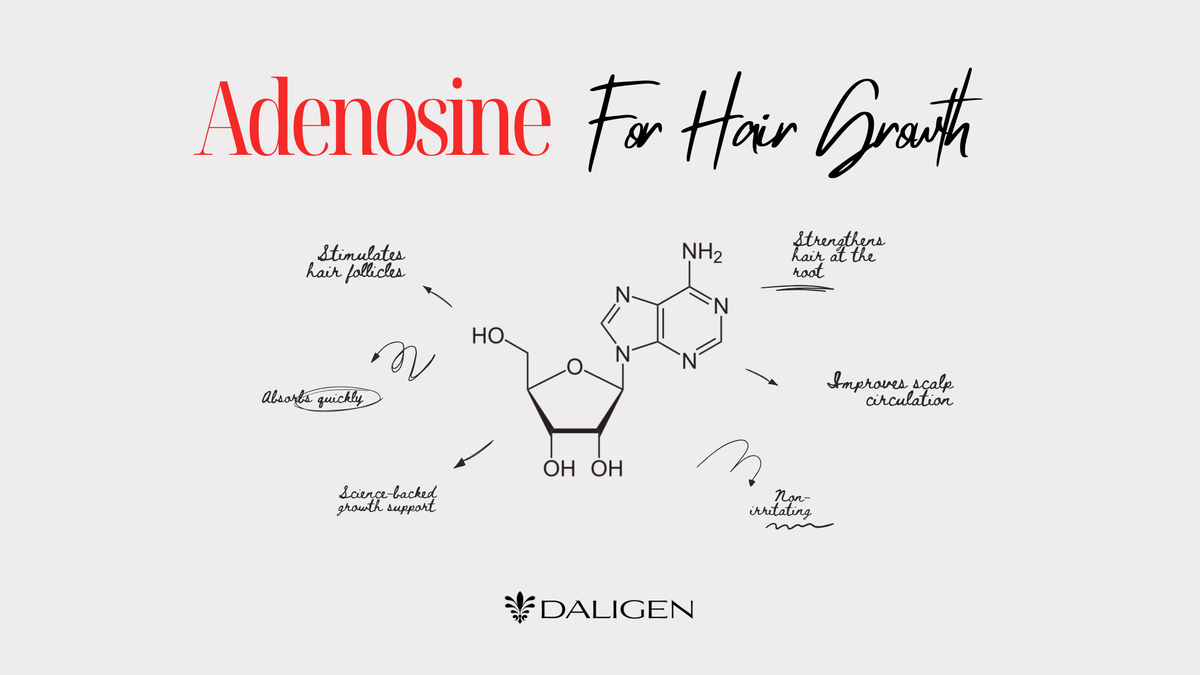
If you're dealing with hair thinning or loss, adenosine is a clinically supported, well-tolerated option that directly targets hair follicle biology. This naturally occurring compound has demonstrated measurable improvements in hair thickness, density, and growth cycle duration when applied topically. Its mechanism is follicle-specific, making it particularly relevant for pattern hair loss.
- How it Works: Adenosine activates specific receptors in hair follicle cells, extending the growth phase (anagen phase) and reducing hair thinning caused by hormones like DHT.
- Clinical Results: Multiple controlled studies demonstrate consistent increases in hair thickness and density with regular topical adenosine use. Reported outcomes include hair thickness increases of up to 10.32% and density improvements of up to 6.20%, with results comparable to or exceeding established topical treatments.
- Safety: Adenosine is well tolerated in topical applications and suitable for long-term use. Clinical trials report very low rates of mild, transient side effects, with no systemic safety concerns observed, making it appropriate for continuous daily application.
- Research Landscape: Existing clinical data consistently supports adenosine’s positive effects on hair growth parameters. Ongoing and future large-scale studies are expected to further refine best-use protocols and expand population coverage.
Daligen’s hair growth serum utilises a clinically aligned formulation combining 0.75% adenosine with panthenol and niacinamide. This combination supports prolonged anagen duration, improved follicle energy metabolism, and scalp barrier health, reflecting protocols used in successful clinical trials.
How Adenosine Works for Hair Growth
Adenosine promotes hair growth through direct, follicle-level biological mechanisms. It interacts with adenosine A2A and A2B receptors on dermal papilla cells, which are central regulators of the hair growth cycle. Notably, A2B receptors are significantly more abundant in human dermal papilla cells, amplifying adenosine’s biological impact.
When these receptors are activated, they trigger the Wnt/β-catenin pathway by inhibiting GSK3β phosphorylation. This activation helps sustain the anagen phase (the active growth phase of hair), enhances the production of growth factors like FGF-7, FGF-2, IGF-1, and VEGF, and boosts mitochondrial energy metabolism in dermal papilla cells. The following sections explain how these mechanisms extend the anagen phase and improve hair thickness and density.
Anagen Phase Extension and Androgen Receptor Effects
Adenosine demonstrates a strong ability to sustain the anagen (growth) phase of the hair cycle. In controlled studies, topical adenosine maintained over 94% of follicles in the anagen phase within days of application, compared to minimal retention in untreated controls. Prolonged anagen duration allows hair fibres to grow thicker, stronger, and longer before shedding.
Adenosine also exhibits inhibitory effects on androgen-related follicle miniaturisation. Research shows reduced androgen receptor signalling and downregulation of SRD5A2 expression, the gene responsible for producing 5-alpha reductase type 2. This mechanism supports the preservation of thicker terminal hairs in androgen-sensitive scalp regions.
"The inhibition of AR signalling via adenosine could have contributed to hair thickness growth" - LG Household & Health Care R&D Centre
Effects on Hair Thickness and Density
Clinical trials provide solid evidence of adenosine's ability to enhance both hair thickness and density. In a four-month study conducted in June 2024 by the LG Household & Health Care R&D Centre, 156 Korean participants were divided into two groups: one used a 5% minoxidil solution, while the other applied an adenosine-based complex (APN) containing 0.75% adenosine, 1% panthenol, and 2% niacinamide. The results? The APN group experienced a 10.32% increase in hair thickness and a 6.20% rise in hair density, outperforming the minoxidil group, which showed a 5.14% gain in thickness and a 5.01% increase in density.
Adenosine's impact goes beyond merely increasing hair count - it transforms vellus hairs (thin, short hairs) into terminal hairs (thicker, longer hairs). This shift is particularly beneficial for those dealing with hair thinning, as it improves the quality of hair growth rather than just the quantity. A meta-analysis of clinical trials using a 0.75% adenosine lotion revealed a notable increase in thick hairs (diameter > 60 μm) with an odds ratio of 1.4 after six months.
Clinical Studies on Adenosine for Hair Growth
Research has extensively explored the use of topical adenosine for promoting hair growth in different groups. These studies commonly employed a 0.75% adenosine lotion applied twice daily, with results highlighting its potential in addressing hair loss. Below, we delve into findings from studies on both women and men, showcasing adenosine's impact on hair growth.
Studies on Female Pattern Hair Loss
From February to August 2008, Hajimu Oura and Jiro Kishimoto led a double-blind, randomised, placebo-controlled pilot study involving 30 Japanese women experiencing female pattern hair loss. Participants were instructed to apply a 0.75% adenosine lotion or a placebo twice daily for 12 months. Published in The Journal of Dermatology, the study revealed that adenosine significantly improved the anagen hair growth rate and increased the proportion of thick hairs compared to the placebo group, with no adverse effects reported.
"Adenosine improved hair loss in Japanese women by stimulating hair growth and by thickening hair shafts." - Hajimu Oura, Department of Dermatology, University of Tokushima
Studies on Male Androgenetic Alopecia
While studies on women highlighted improvements in hair growth cycles, research on men demonstrated equally compelling results. In one 6-month trial, 38 Caucasian men with androgenetic alopecia applied a topical adenosine formula. The findings showed notable increases in hair thickness (≥60 μm) (P < 0.0001) and hair density (P = 0.0470), alongside a reduction in vellus hairs (<40 μm) (P = 0.0154) [5, 14].
Another double-blind study involving 102 Japanese men compared the effects of adenosine lotion to a niacinamide lotion over 6 months. Results indicated that the adenosine group experienced greater improvements in hair thickness and overall appearance (P < 0.05). These findings align with earlier observations that adenosine enhances the anagen phase and improves hair quality. Reflecting on these outcomes, Tokuro Iwabuchi remarked:
"Adenosine effectively increases thick hair in both Caucasian and Japanese subjects with androgenetic alopecia." - Tokuro Iwabuchi, Ph.D., Shiseido Research Centre
Additionally, a 2025 meta-analysis of three clinical trials involving 0.75% adenosine lotion confirmed consistent benefits across various populations [3, 10]. These studies collectively underscore adenosine's role in supporting hair growth and improving hair quality, offering a strong basis for its use in targeted hair care products.
Adenosine in Daligen Hair Growth Products
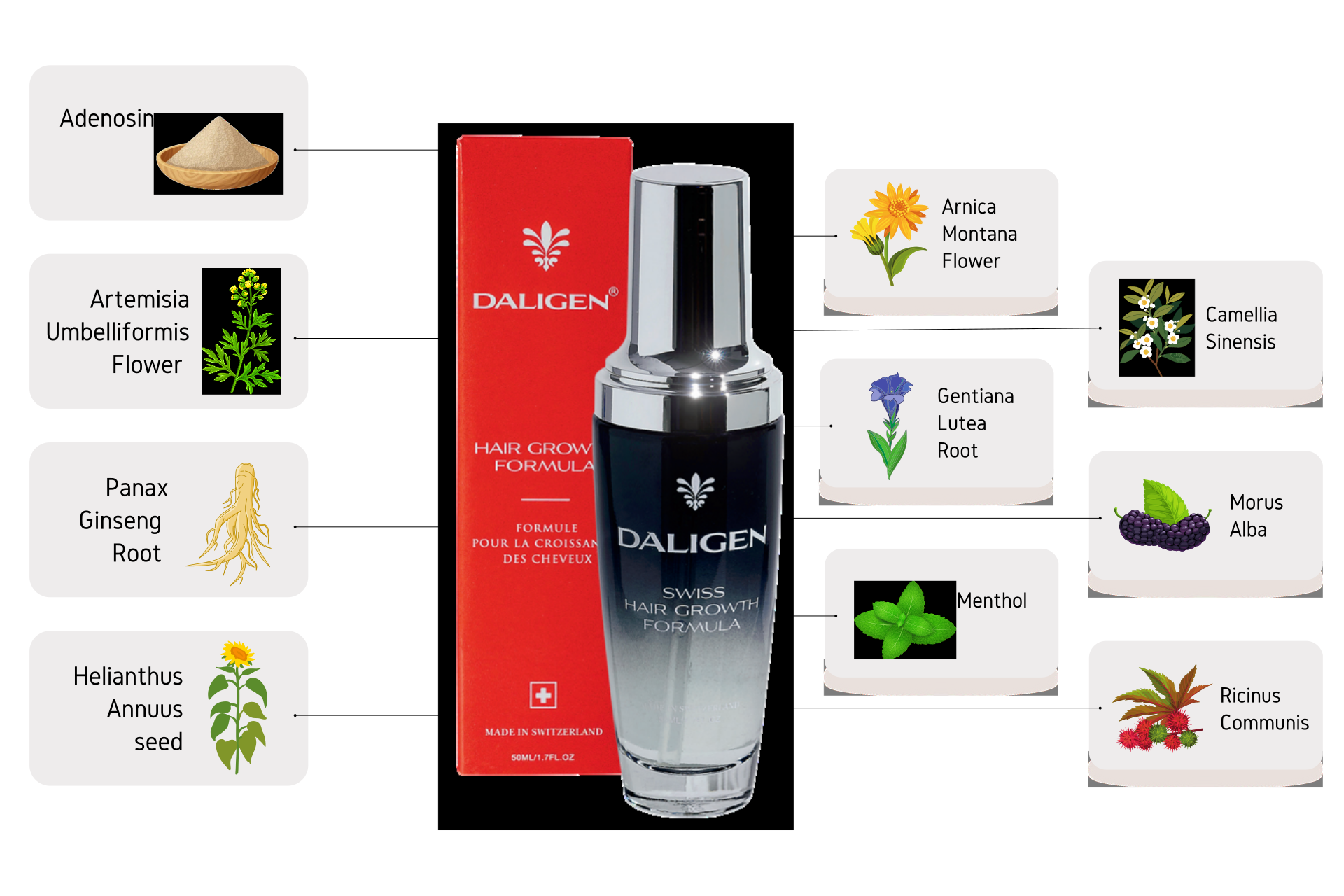
Daligen Hair Growth Formula: What It Offers
Daligen's hair growth serum features a carefully crafted blend of 0.75% adenosine, 1% panthenol, and 2% niacinamide - known as the APN complex. This combination works to stimulate the anagen phase (the active growth phase of hair), enhance cellular energy, and shield cells from oxidative stress. Together, these ingredients create the basis for Daligen's clinically tested approach to addressing hair thinning.
Clinical studies have consistently shown this formula to be effective in managing pattern hair loss. This leave-on product is suitable for both men and women experiencing thinning hair.
Application Instructions for Daligen Products
To achieve the best results, using the product correctly is crucial. Apply the serum twice daily to areas where hair is thinning for optimal absorption. Consistency is key - clinical benefits generally become noticeable after three to six months of continuous use.
Since this is a leave-on formula designed for maximum absorption, it should not be rinsed off after application. Importantly, for those who have experienced side effects like itching or folliculitis with treatments such as minoxidil or finasteride, adenosine-based products can serve as a promising alternative. These formulas are associated with a lower risk of such adverse reactions.
Conclusion
Adenosine has shown promise in promoting hair growth, with clinical trials reporting noticeable improvements when used consistently. Its mechanism involves extending the anagen phase (the active growth stage of hair), reducing androgen receptor activity, and enhancing cellular energy processes.
"The results from clinical trials published until now suggest that topical adenosine increases hair thickness, reduces excessive hair loss, stimulates hair regrowth, and increases hair density." - Ewelina Szendzielorz, Department of Experimental Dermatology and Cosmetology
However, current research is not without its challenges. Studies often face limitations in scale and design, leaving room for further large-scale, long-term research to deepen our understanding of adenosine's long-term effects on hair growth.
For those dealing with hair thinning or loss, Daligen’s hair growth serum offers a tested solution. This formula combines 0.75% adenosine with panthenol and niacinamide, delivering noticeable results.
To use, apply the serum twice daily to areas of thinning hair. With consistent application, visible improvements can be expected within three to six months, making adenosine a reliable and safe option for addressing pattern hair loss in both men and women.
FAQs
Is adenosine more effective than minoxidil for hair growth?
Clinical studies indicate that adenosine delivers hair thickness and density improvements comparable to established topical treatments, with the added advantage of excellent tolerability. Its follicle-specific mechanism and favourable safety profile make it especially suitable for early-stage thinning and long-term maintenance.
Are there any long-term risks associated with using adenosine for hair growth?
Clinical research indicates that adenosine is typically safe for extended use, with minimal to no adverse effects observed over durations ranging from 6 to 12 months. Current findings suggest no notable long-term risks have been identified.
However, individual responses can differ. If you’re worried or notice any unusual reactions, it’s wise to reach out to a healthcare professional for tailored guidance.
Is adenosine effective for different types of hair loss?
Adenosine has been gaining attention for its potential benefits in addressing pattern hair loss, including androgenetic alopecia in men and female-pattern thinning. Clinical research suggests that it may help increase hair density, reduce shedding, and thicken individual strands. Scientists believe adenosine promotes hair follicle growth by activating the cAMP-mediated Wnt/β-catenin pathway. Additionally, it might inhibit androgen-receptor signalling, which is a known factor in androgenetic alopecia.